
Dupuytren’s Contracture
Dupuytren’s contracture is a progressive hand condition in which thickened tissue beneath the skin causes one or more fingers to bend toward the palm. It most commonly affects the ring and little fingers, and can make everyday tasks such as gripping, shaking hands or wearing gloves increasingly difficult. At Melbourne Hand Rehab, we provide assessment and rehabilitation for Dupuytren’s contracture at 11 clinics across Melbourne.
Dupuytren’s Contracture Symptoms
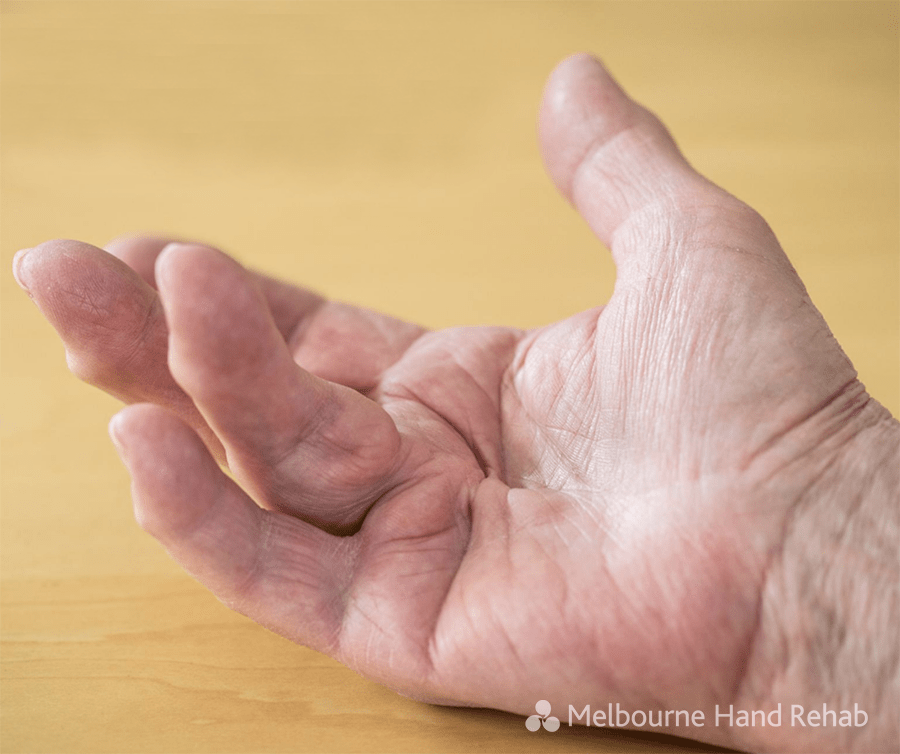
Dupuytren’s progresses slowly. As it progresses, the skin on your palm can begin to look puckered or dimpled. A firm lump of tissue may form on your palm. This lump might be sensitive but shouldn’t be painful. Typical symptoms include:
- A lump or nodule on the palm
- Puckered or dimpled skin
- A thickened cord running along the palm to the fingers.
- Fingers become clawed as they are pulled towards the palm
Dupuytren’s Disease Assessment
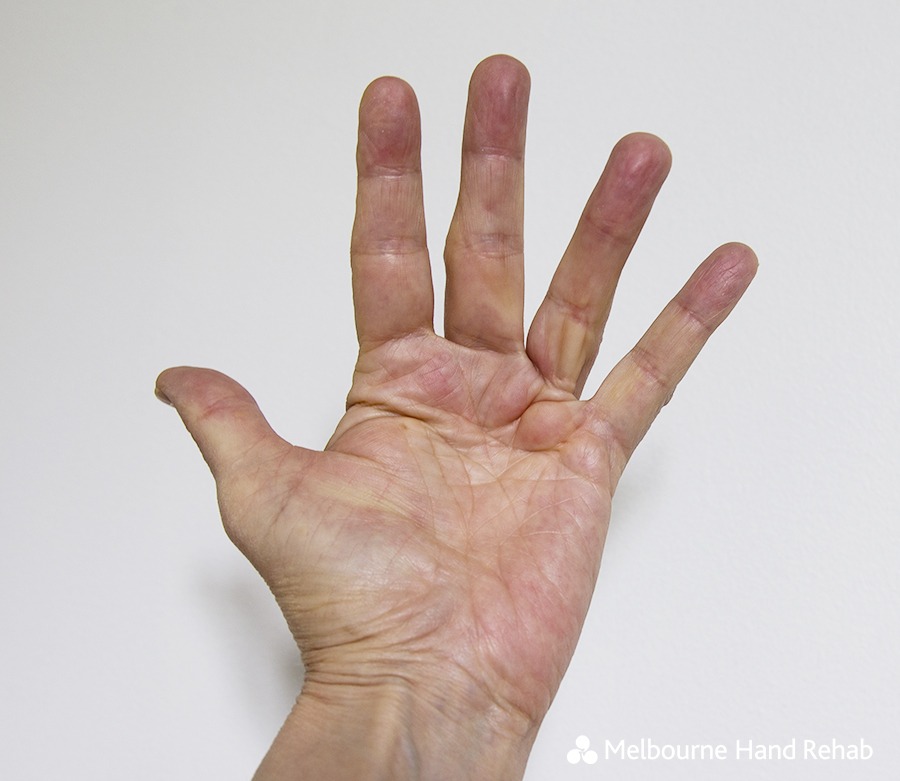
Assessment of Dupuytren’s Disease typically includes:
- Assessing the hand for nodules or thickened cords
- Checking for inflammation, pain or tenderness
- Assessing the functional mobility of the hand
Treatment
Unfortunately, there are no preventative measures available to stop the progression of this disease. For most people, surgery is the only option. Surgery is usually recommended when you are no longer able to comfortably put your hand flat on the table.
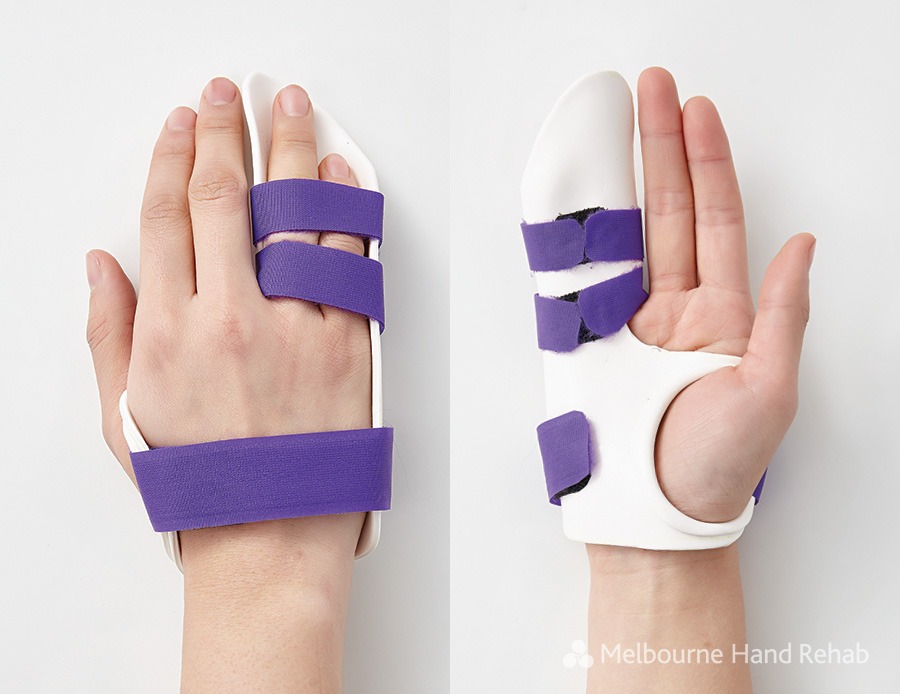
Hand Therapy treatment for Dupuytren’s Contracture is usually post operative. It is designed to restore hand function and maintain the straightness that has been achieved through surgery. Therapy may include:
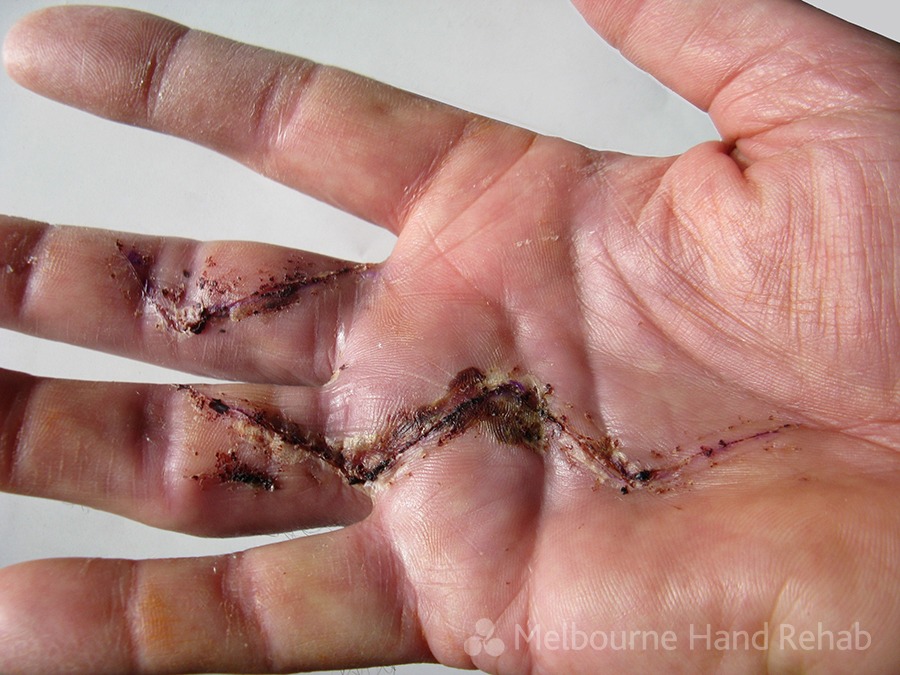
Following Dupuytren’s surgery – whether fasciectomy, dermofasciectomy or needle aponeurotomy – hand therapy is essential to restore finger extension, manage scarring and regain full function. Our therapists provide post-operative rehabilitation tailored to your surgeon’s protocols, including custom splinting to maintain correction following surgery.
What’s Next?
If you have Dupuytren’s disease, consult one of our hand therapy practitioners today. We treat Dupuytren’s contracture and provide post-operative rehabilitation across all 11 Melbourne clinics: Melbourne, Richmond – Victoria Gardens, Richmond, North Essendon, Werribee, Hoppers Crossing, Ivanhoe, Mill Park, Boronia, Moorabbin and Caroline Springs.
Click HERE to conveniently book an appointment online.
Frequently Asked Questions
Can Dupuytren’s contracture be treated without surgery?
In early stages, hand therapy can help manage symptoms and monitor progression. However, Dupuytren’s contracture is a progressive condition and surgery is often required once the finger contracture significantly affects hand function. Your therapist can assess your condition and advise on the most appropriate next steps.
What does hand therapy involve after Dupuytren’s surgery?
Following surgery, your therapist will provide wound and oedema management, custom splinting to maintain finger extension, scar management, and progressive exercises to restore movement and strength. Early therapy is important to achieve the best outcome from surgery.
How long does recovery take after Dupuytren’s surgery?
Recovery varies depending on the extent of the contracture and the type of procedure performed. Most patients are in active hand therapy for 6-12 weeks post-surgery, with splinting continuing for several months to maintain correction.
Do I need a referral?
Private clients can book directly – no referral needed. A referral is required for WorkCover, TAC, DVA or Medicare Chronic Disease Management plan clients.
HOW CAN WE HELP?
For enquiries and appointments please call 03 9458 5166 or conveniently book online.