02 Dec Summer Hand Safety: Protection For Mowing & Casting
Summer hand safety is crucial in the season of yard work and enjoying the great outdoors. Unfortunately, our hand therapists also know it as the season of preventable trauma.
Before you head to the lake or fire up the mower, take a few minutes to review this essential summer hand safety guide to keep your hands intact this season.
Lawnmower Safety
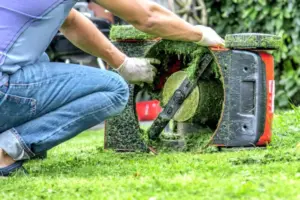
Lawnmower accidents are consistently the most severe, often resulting in mangling injuries that damage bone, multiple tendons, nerves, and soft tissue. These injuries carry a high risk of permanent disability and even amputation.
The Most Crucial Prevention Rule: NEVER use your hands or feet to clear a clog or debris. Wet grass, rocks, or sticks can jam the blade, creating stored energy. When the clog is cleared, the blade can spin unexpectedly, even if the engine is off.
- Turn the engine OFF immediately.
- Use a long stick, wooden dowel, or broom handle to clear the obstruction. Never reach under the mower deck.
- Always wear heavy, closed-toe boots (no sandals!) and protective goggles.
- Before mowing, walk the lawn and remove all debris – stones, toys, and sticks can become high-speed projectiles.
Fishing-Related Injuries
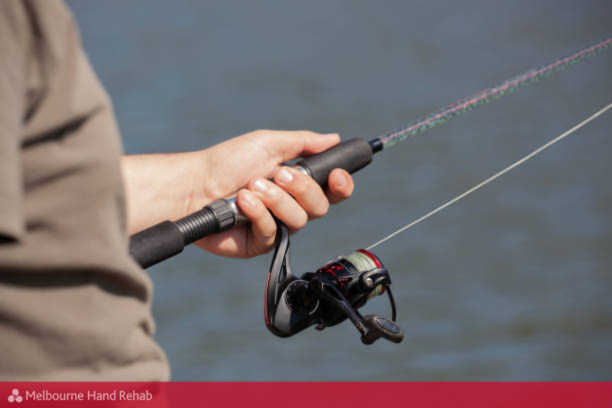
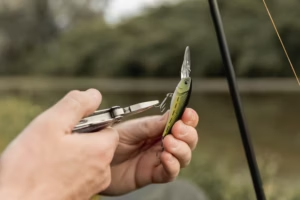
Fishing is a fun and relaxing summer activity, but it introduces unique hazards that can cause deep punctures and painful chronic conditions. A fish hook, especially one with a barb, is designed to penetrate and lock into flesh. Attempting to remove a deeply embedded hook yourself can cause significantly more damage.
Overuse & Repetitive Strain: The repetitive motion of casting and reeling, especially during long days on the water, can strain the tendons in your arm.
Common Conditions: Tennis Elbow (pain on the outside of the elbow) and Golfer’s Elbow (pain on the inside of the elbow) result from inflamed forearm tendons.
Prevention: Warm up your arms, wrists, and shoulders before you cast. Take frequent breaks and stretch. If pain is persistent, consider an ergonomic reel and talk to our hand therapists about strengthening exercises.
The Most Crucial Prevention Rule: NEVER try to yank out a deeply embedded hook. If the hook is near a joint, tendon, or major blood vessel, self-removal can cause permanent injury. The combination of a puncture wound and contaminants (water, bait) is a recipe for infection, which can quickly spread to joints and tendons.
- Cut the Line: If a lure or line is attached, cut it immediately to remove tension.
- Stabilise: Gently cover the area and seek medical attention.
- Always wear durable, cut-resistant fishing gloves when handling lines, nets, and fish.
- Wear eye protection when casting, especially when others are nearby.
When to get help
For minor cuts and strains, rest, ice, and cleaning may be sufficient. However, for summer injuries involving high-energy equipment or deep punctures, immediate, specialist evaluation is critical. Rehabilitation plays a crucial role in regaining hand function and preventing long-term disability following fishing or lawnmower accidents. These injuries can involve deep lacerations, tendon and nerve damage, or even partial amputations, requiring specialised hand therapy to restore movement, strength, and dexterity.
Seek emergency care immediately if you have:
- Visible tendons or bone: A deep cut that exposes white or yellow tissue.
- Numbness or tingling: This indicates potential nerve damage.
- Inability to move a finger or wrist joint (may indicate a severed tendon).
- Uncontrolled bleeding or a wound that is gaping open.
- A deeply embedded fish hook near a joint or vital structure.
What does Hand Therapy focus on for these injuries?
- Customised Splinting: To protect repaired tissues, maintain proper alignment, and support healing following surgery or wound closure.
- Therapeutic Exercises: Gradual, targeted exercises to restore range of motion, strength, and fine motor skills – critical for tasks like gripping, casting, or tool use.
- Scar and Sensory Management: Techniques to minimise scar adhesions, reduce sensitivity, and retrain the hand’s sensory function, which is often affected in fishing hook or blade injuries.
- Functional Retraining: Simulated everyday and recreational activities to build confidence and skill for safe return to work, sport, or leisure pursuits.
Melbourne Hand Rehab
Melbourne Hand Rehab provides tailored rehabilitation for complex injuries – so please contact us if you require rehabilitation, we’re here to help!
BOOK AN APPOINTMENT
For more information, call us directly on 03 9458 5166
You might also be interested in: