23 Feb Overuse injuries: when hobbies become the problem
Overuse injuries are one of the most common reasons artists seek hand therapy. They often develop gradually and are easy to dismiss at first, until pain or weakness starts to interfere with both creative work and everyday tasks.
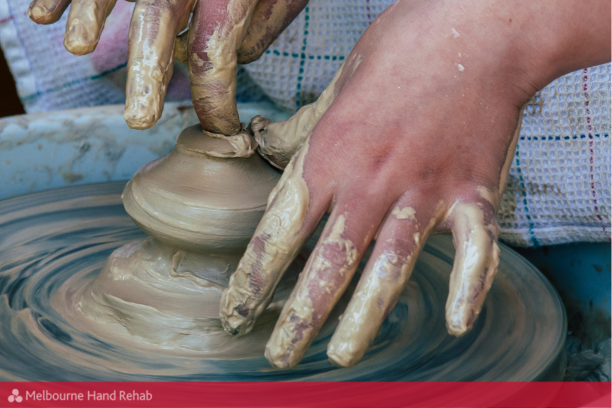
For many artists, making is more than a hobby. It is how you relax, express yourself, and sometimes how you earn a living. Jewellery making, painting, ceramics, printmaking, knitting and other hand-intensive crafts demand precision, repetition and long hours of focused work. Over time, those same qualities can place significant strain not only on the hands and wrists, but also on the forearms and elbows.
What is an overuse injury?
An overuse injury occurs when tissues such as tendons, muscles or nerves are repeatedly loaded without enough time to recover. Unlike a sudden injury, there is often no single moment where something goes wrong. Instead, small amounts of stress build up over weeks or months.
For artists, this can involve thousands of fine movements such as gripping tools, pinching small components, repetitive brush strokes, sustained wrist extension, or prolonged loading through the forearm during tasks like polishing, wedging clay or working at a bench.
Hand therapists frequently see artists with conditions such as:
• Tendinitis or tendinopathy of the wrist, thumb or fingers
• De Quervain’s tenosynovitis from repetitive thumb and wrist movements
• Carpal tunnel syndrome related to prolonged gripping or sustained wrist positioning
• Trigger finger from repetitive or forceful finger use
• Lateral elbow pain (often called tennis elbow) related to repeated gripping, pinching and sustained forearm and wrist load
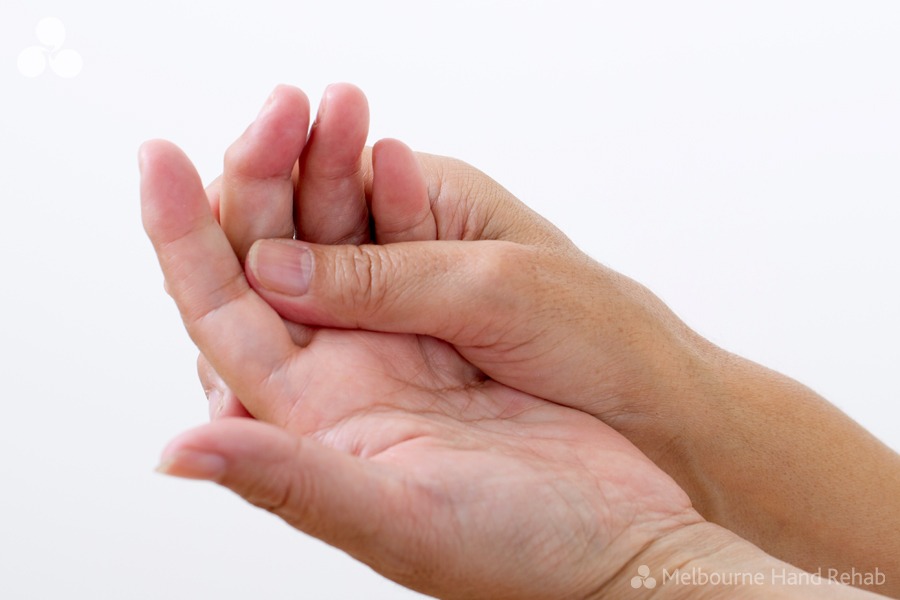
Pain may be felt locally in the hand, wrist or elbow, or travel up the arm. Some people also notice stiffness, swelling, clicking, weakness, or changes in grip endurance.
Why artists are at risk
Creative careers and hobbies often provide unique demands on the upper limb.
Artist’s often:
- Work for long periods without breaks.
- Use sustained grip or pinch with small tools.
- Load the forearm and elbow repeatedly during fine, controlled movements.
- Maintain awkward or static postures at benches, wheels or easels.
- Increase workload suddenly before exhibitions, markets or deadlines.
Over time, these patterns can overload not just the small joints of the hand, but also the tendons that cross the wrist and attach at the elbow. This is why pain may start in the hand and later be felt further up the arm.
Early signs you shouldn’t ignore
Catching an overuse injury early can prevent long-term problems.
Signs to take seriously include:
- Aching or pain during or after making, including in the forearm or elbow.
- Stiffness first thing in the morning.
- Pain with gripping, lifting or sustained tool use.
- Pain that lingers for hours or days after work.
- Needing to change how you hold tools to manage discomfort.
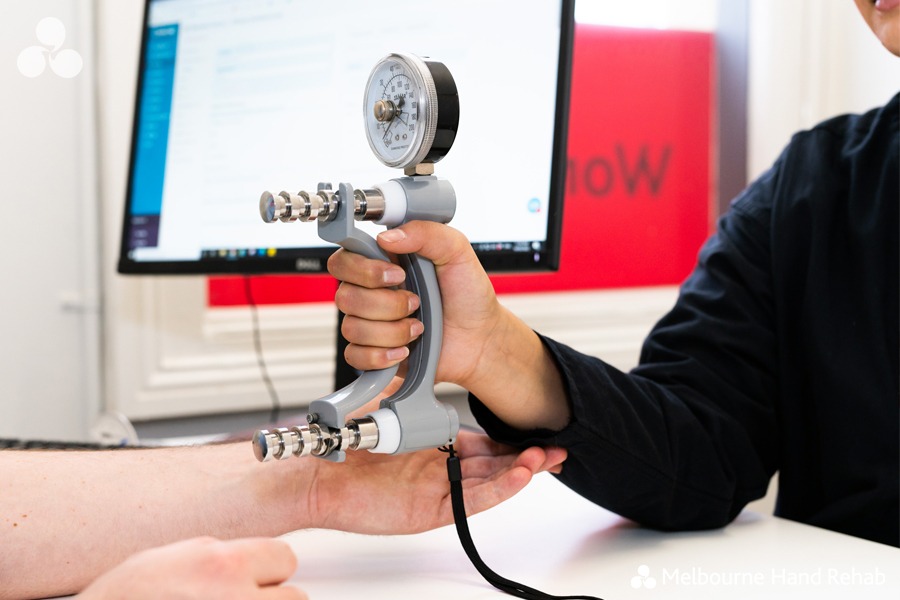
- Reduced strength, control or endurance.
Pain is not a normal or necessary part of creating. Persistent symptoms are a signal that something in your workload, technique or recovery needs to change.
How can hand therapy help artists?
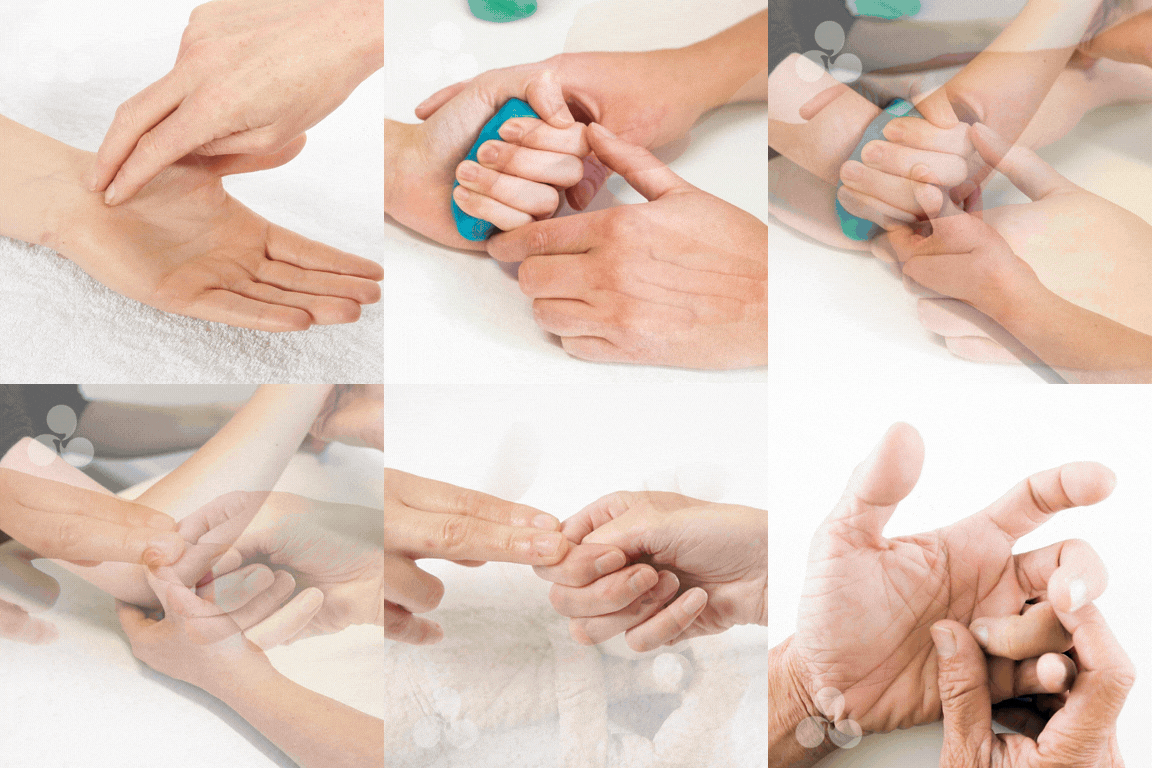
Hand therapy focuses on keeping you creating safely, not stopping you from doing what you love.
A hand therapist can:
- Identify the specific problem/condition at the hand, wrist or elbow.
- Modify techniques, tools or grip strategies to reduce strain.
- Provide splinting and immobilisation if required for recovery.
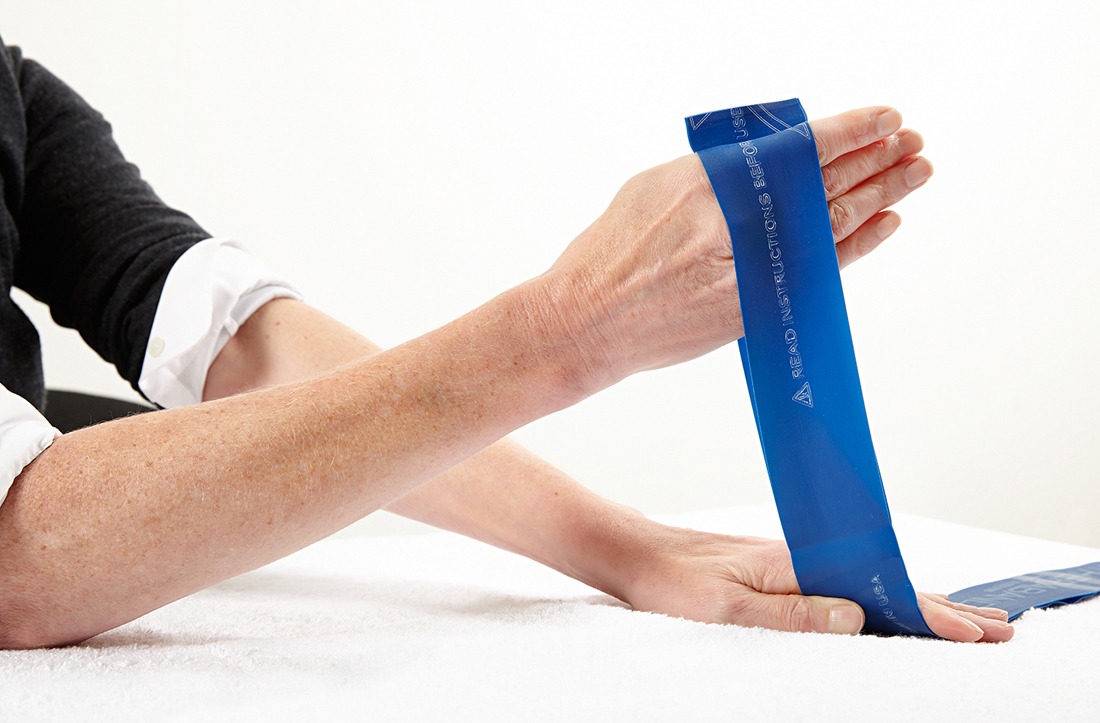
- Prescribe targeted exercises to build strength and capacity through the hand, forearm and shoulder.
- Address posture and upper limb mechanics.
Treatment is tailored to your art form and your goals, whether that is returning to long studio sessions or preparing for a specific project or event.
What changes can you make now?
- Build regular micro-breaks into your work, even when inspired.
- Vary tasks to avoid repeating the same movement for long periods.
- Use larger-handled or ergonomic tools where possible.
- Keep wrists and elbows in more neutral positions rather than sustained end-range postures.
- Warm up your hands and forearms before long sessions.
- Gradually increase workload rather than jumping straight into long hours.
Most importantly, listen to early discomfort and address it before it escalates.
When to seek help
If pain is persistent, worsening, or affecting your ability to create or manage daily tasks, it is worth seeking assessment. Early hand therapy intervention often leads to faster recovery and helps prevent chronic issues extending from the hand into the elbow.
Creating art should support your wellbeing, not undermine it. With the right guidance, most artists can continue doing what they love while protecting their hands and arms for the long term.
If you are experiencing upper limb discomfort from doing the things you love, please contact us on 03 9458 5166, we’re here to help!
BOOK AN APPOINTMENT
For more information, call us directly on 03 9458 5166
You might also be interested in: