18 Mar Shoulder Rehabilitation: What to Expect After Surgery
Shoulder surgery is often recommended when pain, instability, or functional limitation can no longer be managed conservatively. Understanding the rehabilitation process is a crucial part of achieving a successful outcome.
At Melbourne Hand Rehab, our team supports patients through every stage of surgical shoulder recovery, with a focus on restoring movement, strength, confidence, and long-term shoulder health.
Anterior Shoulder Instability and Surgery
Glenohumeral dislocation and anterior shoulder instability are most commonly seen in younger athletes, particularly those involved in contact or collision sports. Recurrent instability is associated with a high risk of repeat dislocations, increasing damage to soft tissue and bone, longer time away from sport, and a significant impact on quality of life.
For athletes experiencing recurrent anterior instability, surgery is often recommended to restore stability and reduce the risk of ongoing damage. Surgical options may include:
- Bankart repair, which addresses soft tissue injury to the labrum.
- Latarjet procedure, which involves bone reconstruction using a coracoid bone block.
The choice of procedure depends on the severity of instability, presence of bone loss, and individual patient factors.
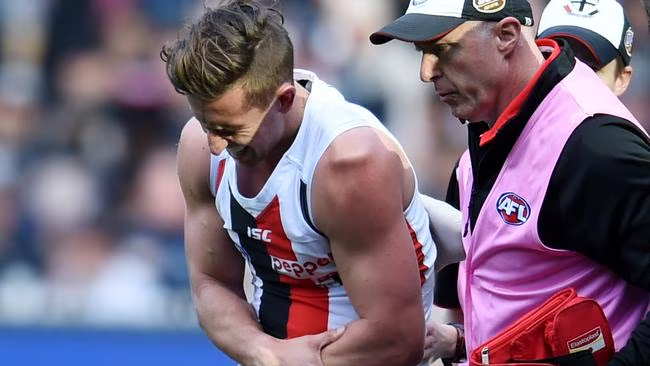
AFL Shoulder Injury – Image credit: Fox Sports
Principles of Post-Operative Shoulder Rehabilitation
The primary aim of rehabilitation following shoulder surgery is to restore functional movement while allowing adequate healing of repaired tissues. Outcomes depend on a combination of anatomical, neuromuscular, and psychosocial factors.
Key goals of rehabilitation include:
- A stable, pain-free shoulder.
- Adequate strength and muscle control.
- Sufficient mobility to return to daily activities, work, and sport.
Rehabilitation must respect:
- The type of surgical procedure performed.
- Healing timelines of soft tissue and bone.
- Gradual and appropriate loading of healing tissues.
- The balance between protection and progression.
At Melbourne Hand Rehab, progression is milestone-driven rather than time-driven, ensuring each patient advances safely based on tissue health and functional readiness.
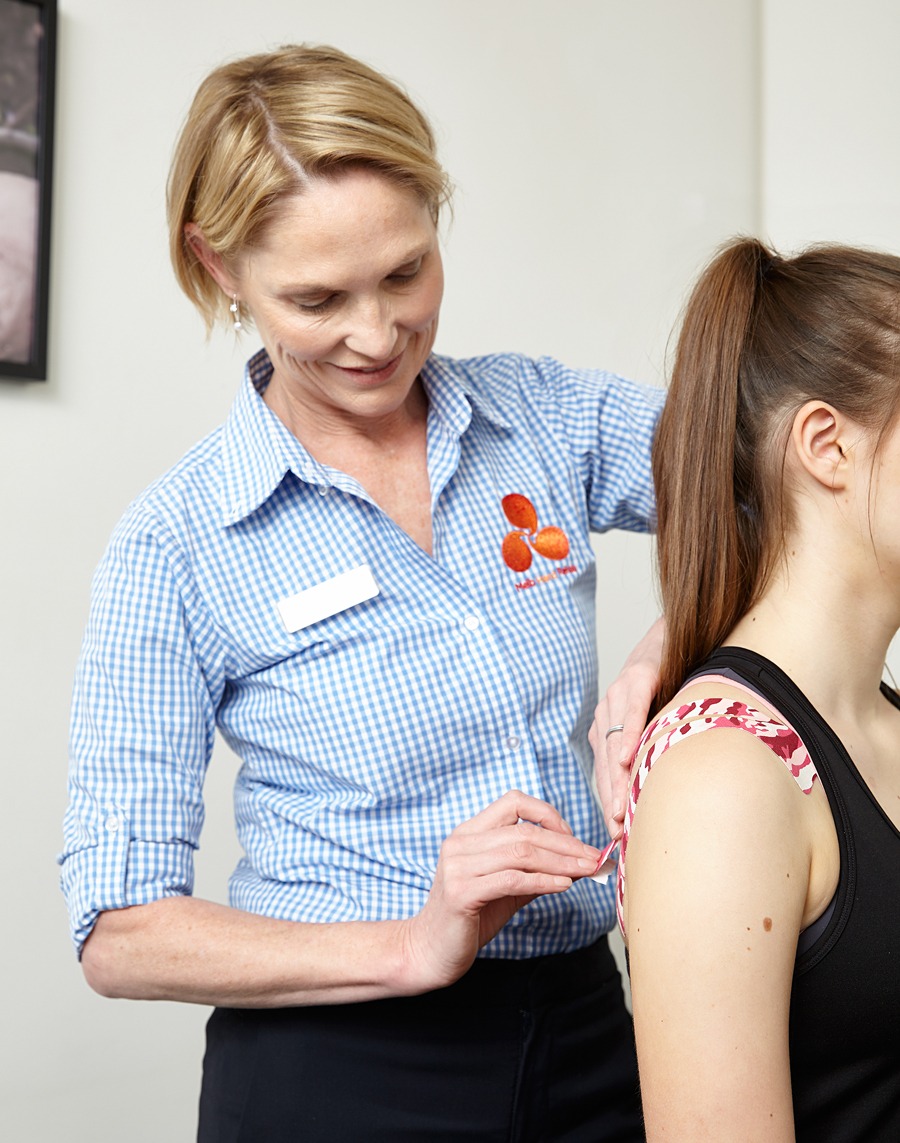
Shoulder rehabilitation, Kinesis tape
Rehabilitation Timeline After Shoulder Surgery
Rehabilitation progresses through structured phases, with increasing load and functional demand:
Early Phase (Weeks 0-6): Protection
- Sling wear is essential to protect healing tissues.
- Focus on pain management, swelling control, and gentle movement.
- External rotation is carefully limited.
- Emphasis on posture, scapular stability, and preventing stiffness.
Middle Phase (Weeks 6-12): Progressive Strengthening
- Gradual weaning from the sling.
- Increasing range of motion in all directions.
- Introduction of isometric rotator cuff exercises.
- Progressive strengthening as pain and control allow.
Late Phase (Weeks 12-24): Return to Activity
- Advanced strengthening and functional exercises.
- Gradual return to work, sport, and higher-level activities.
- Shared decision-making guides readiness for return to sport.
Bone healing typically occurs around 8 weeks, while full tissue maturation continues well beyond this period.
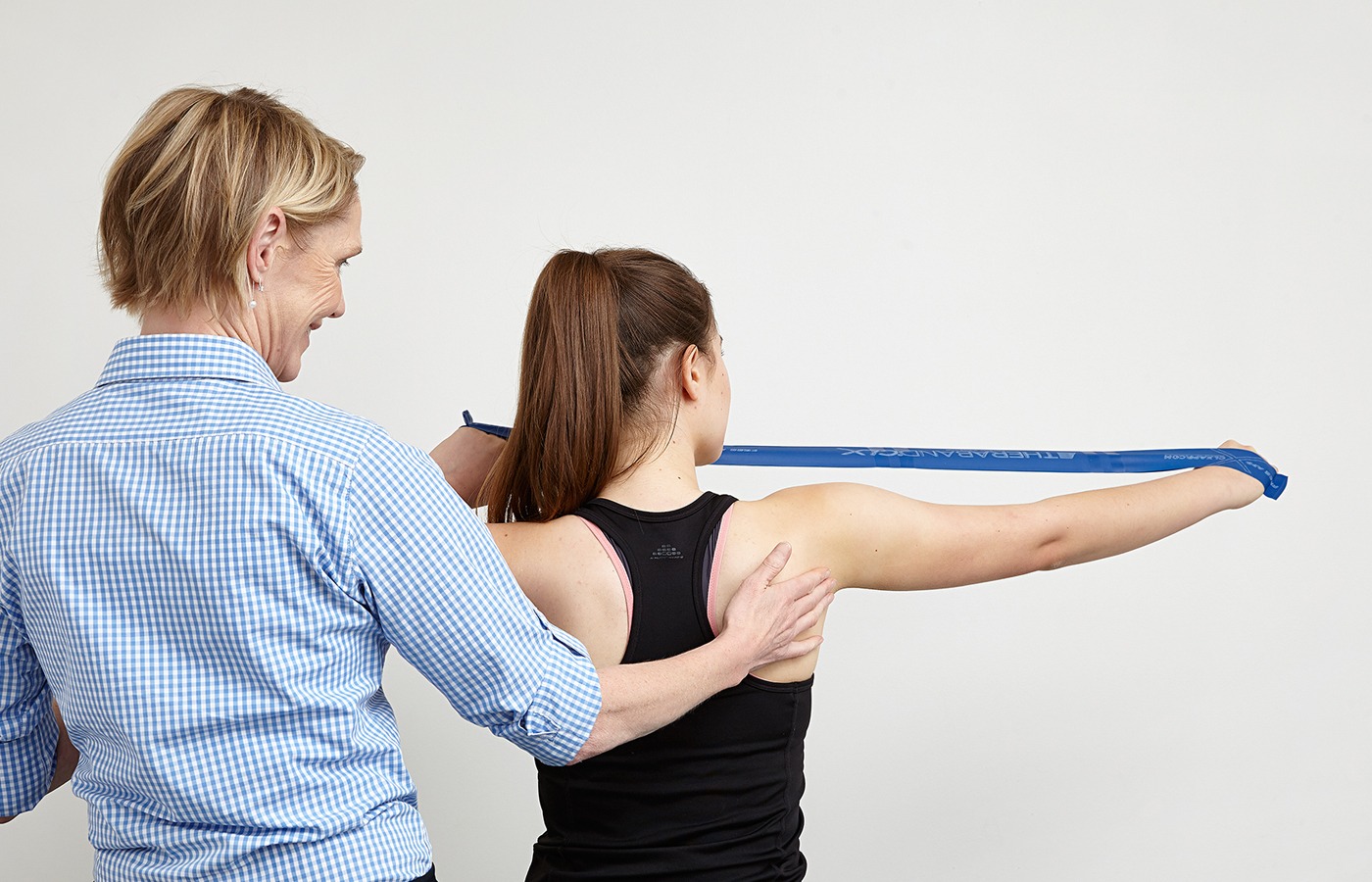
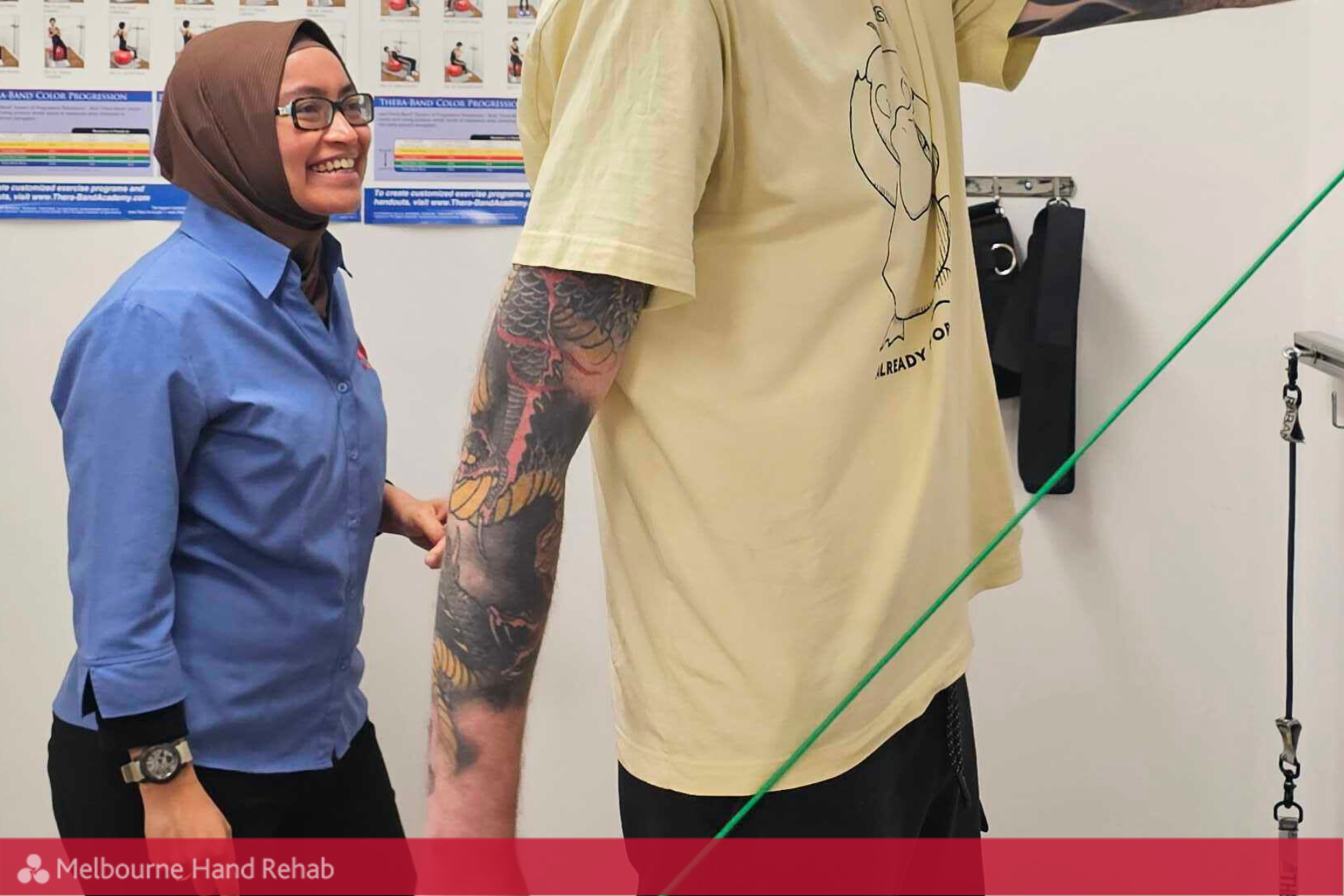
Theraband shoulder exercises
Rotator Cuff Repair: What Patients Should Know
Following rotator cuff repair, the first six weeks are a maximum protection phase, with sling wear required to support healing.
Early Post-Operative Goals (Weeks 0-6):
- Protect repaired tissues.
- Monitor pain, circulation, and respiratory function.
- Minimise the negative effects of immobilisation.
- Restore scapular control and posture.
- Begin gentle passive movements under guidance.
Patients are introduced to breathing exercises, neck mobility, scapular setting, and controlled passive shoulder movements early in recovery.
- Gradual weaning from the sling.
- Increasing shoulder range of motion, including behind-the-back movements.
- Introduction of isometric and then resisted strengthening.
- Ongoing focus on posture and movement quality.
Progression is carefully monitored to avoid overloading the repair.
Possible Complications and Recovery Expectations
Potential complications following rotator cuff repair include:
- Ongoing pain.
- Post-operative stiffness or capsulitis.
- Risk of re-tear if progression is too aggressive.
- Secondary impingement due to rotator cuff weakness.
Rehabilitation progression must be guided by movement quality and control, not just time since surgery. In some cases, full recovery can take 12-18 months, with most patients achieving pain-free function for daily and moderate upper limb activities earlier in the process.
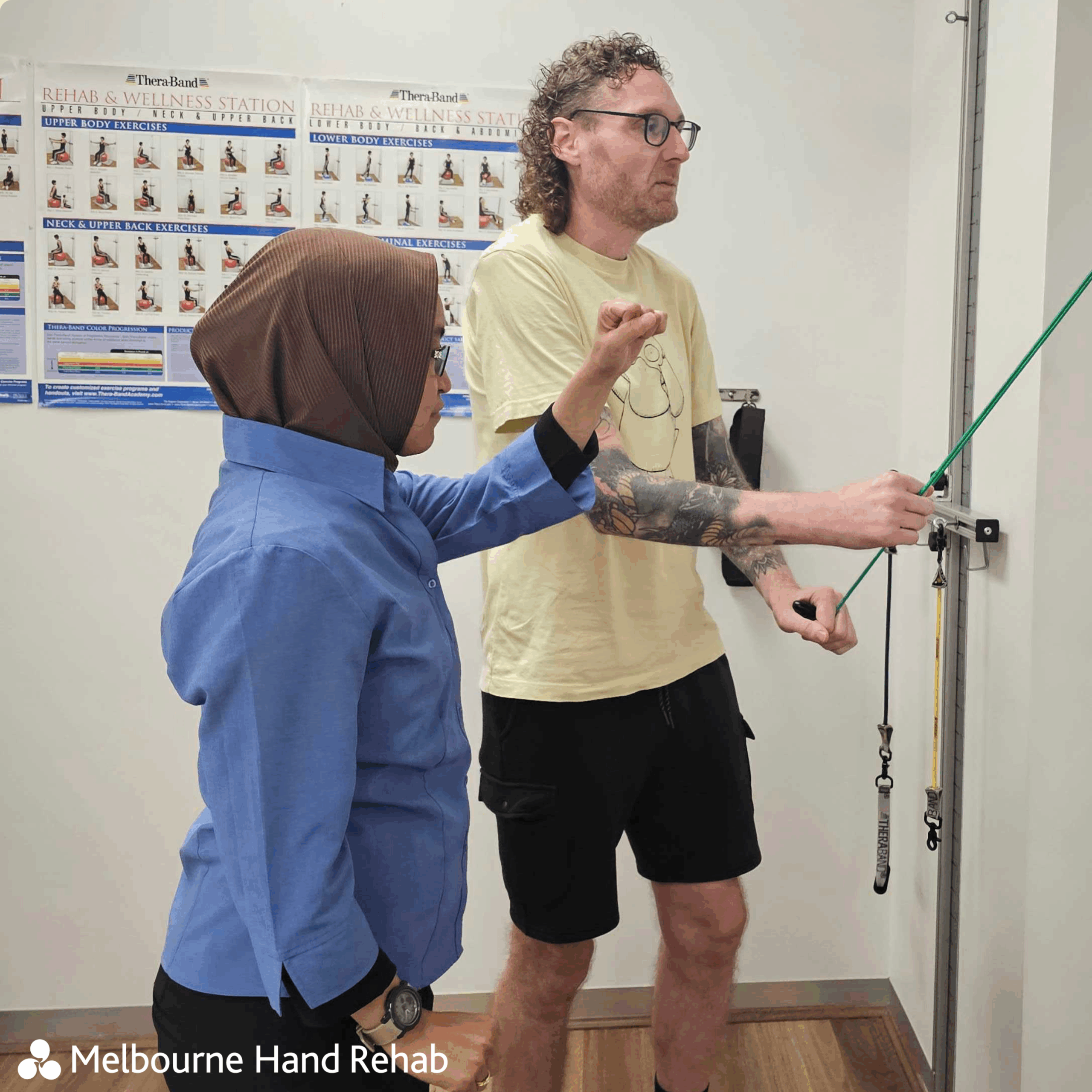
Supporting Your Recovery at Melbourne Hand Rehab
At Melbourne Hand Rehab we work closely with surgeons and patients to deliver evidence-based, individualised shoulder rehabilitation. Whether you are preparing for surgery or recovering post-operatively, our goal is to help you return safely and confidently to the activities that matter most to you.

If you are planning shoulder surgery or have recently undergone a procedure, early guidance can make a significant difference to your recovery. Call 03 9458 5166 to book an appointment!
BOOK AN APPOINTMENT
For more information, call us directly on 03 9458 5166
You might also be interested in: