
09 Jun Arthritis Isn’t Just “Wear and Tear”
If you’ve been told you have arthritis in your hands or wrists, you might be wondering what that actually means – and what you can do about it.
Arthritis is one of the most common conditions we treat at Melbourne Hand Rehab, and one of the most misunderstood. This guide explains what arthritis really is, how it affects the hand and wrist, and how hand therapy can help you manage symptoms and stay independent.
What is Arthritis?
When people hear the word “arthritis”, many immediately think of aging joints simply wearing out over time. While that idea is common, it’s not quite accurate – and understanding the difference can change how your treatment and care are approached.
Arthritis is not a single all-encompassing condition, instead it’s an umbrella term for over 100 different types of joint disorders, many of which involve in- flammation, immune system activity, or changes in joint tissues. For example, osteoarthritis, which is the most common form, involves changes in cartilage,
but it’s also influenced by inflammation, joint mechanics, and even muscle strength. Rheumatoid arthritis, which is another commonly known condition, is caused by abnormal autoimmune responses where the body mistakenly attacks its own joints.
Other types of arthritis that commonly affect the hands and wrists include:
- Psoriatic arthritis – associated with the skin condition psoriasis, this form can cause significant swelling and joint changes in the fingers and can affect the tendons surrounding the joints as well.
- Gout – caused by a build-up of uric acid crystals in the joints, gout can cause sudden, severe pain and swelling, often affecting the base of the thumb or the finger joints.
- Post-traumatic arthritis – arthritis that develops in a joint following a previous fracture, dislocation or ligament injury, even years after the original incident.
Understanding which type of arthritis you have matters because the treatment approach, the goals of therapy and the way your condition is likely to progress all differ depending on the diagnosis. This is why a thorough assessment is always the starting point.
Symptoms
In the hands, arthritis can affect everyday tasks like gripping, pinching, writing, or opening jars. Symptoms such as stiffness, swelling, pain, and reduced movement can come and go depending on each person’s lifestyle, activity levels and the type of arthritis they have.
Common symptoms in the hand and wrist include:
- Stiffness that is often worse in the morning or after periods of rest.
- Aching or sharp pain with activity, particularly gripping and pinching.
- Swelling around one or more joints.
- A grinding or crunching sensation with movement.
- Reduced strength – particularly in grip and pinch.
- Visible joint changes such as bony enlargement at the finger joints.
- Warmth or redness around affected joints during flare-ups.
It is also worth noting that symptoms do not always reflect the degree of joint change visible on imaging. Some people with significant arthritis on X-ray have relatively mild symptoms, while others with minimal imaging changes experience significant pain and functional limitation. This is one of the reasons why treatment is always based on your symptoms and goals – not just what your scan shows.
The Role of Hand Therapy
Hand therapy plays a key role in reducing pain, improving movement, and protecting your joints. At our clinic, treatment is tailored to the person and their goals.
Common interventions may include:
- Individualised exercise programs to improve strength, movement, and joint support.
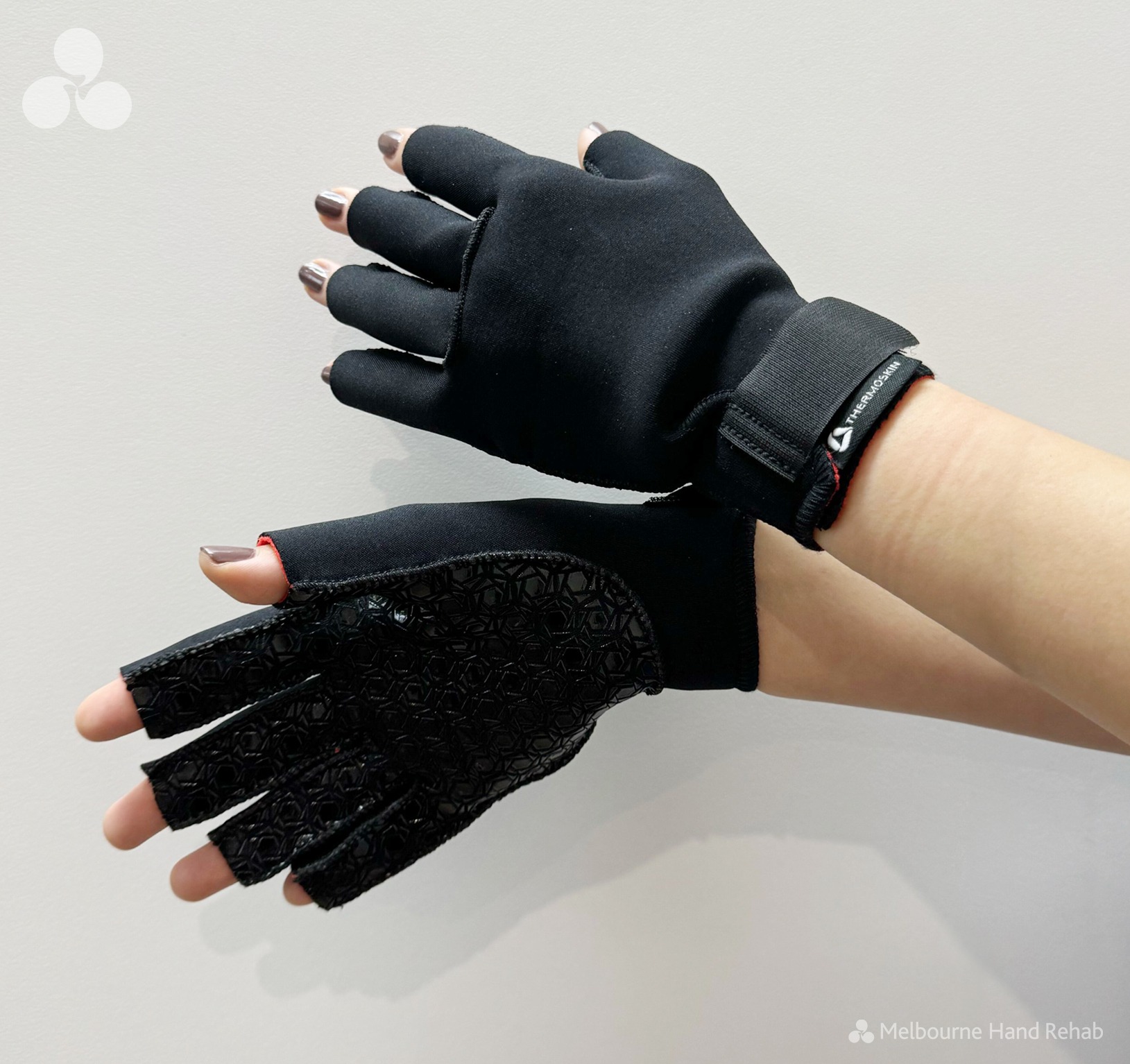
- Splinting, if necessary, to rest irritated joints, reduce strain, and improve hand function.
- Heat and cold therapies to help manage pain and stiffness.
- Joint protection strategies and activity modifications to make daily tasks easier with less strain on the joints.
- Education on pacing and ways to protect affected joints.
- Manual therapy and soft tissue techniques, where appropriate, to support comfort and mobility.

The goal of hand therapy is not just to treat symptoms, but to help people stay active, independent, and confident in using their hands. Through targeted exercises, splinting, education, and activity modification, we can help you stay independent and keep doing the things you enjoy. With the right support and strategies, there’s much more you can do to manage arthritis rather than simply putting up with it.
What can I do about my Arthritis?
The most important first step is getting an accurate assessment from a hand therapist who can identify which type of arthritis is affecting you, which joints are involved and how it is impacting your specific daily activities and goals.
From there, a personalised management plan can be developed that addresses your symptoms, protects your joints and builds your capacity to self-manage over the long term.
Arthritis is a long-term condition but it is not one you simply have to accept and manage alone. With the right team around you, most people with hand and wrist arthritis are able to maintain meaningful function, reduce pain and continue doing the activities that matter most to them.

If you’re having concerns about arthritic joints or would like guidance on how to manage symptoms, book in with one of our hand therapists today!
BOOK AN APPOINTMENT
For more information, call us directly on 03 9458 5166
You might also be interested in: