23 Apr Tendon vs Nerve Pain in Upper Limb Injuries
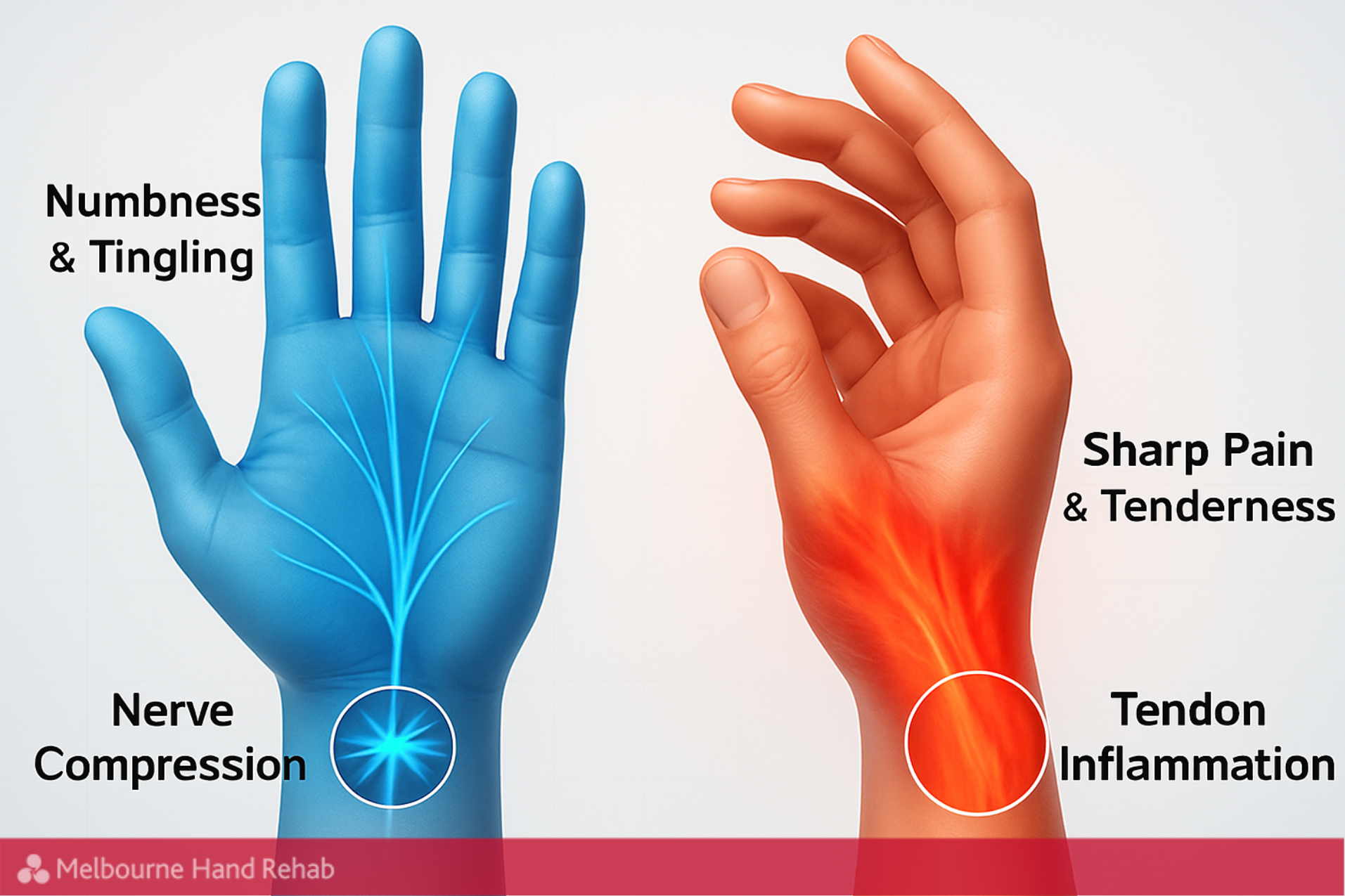
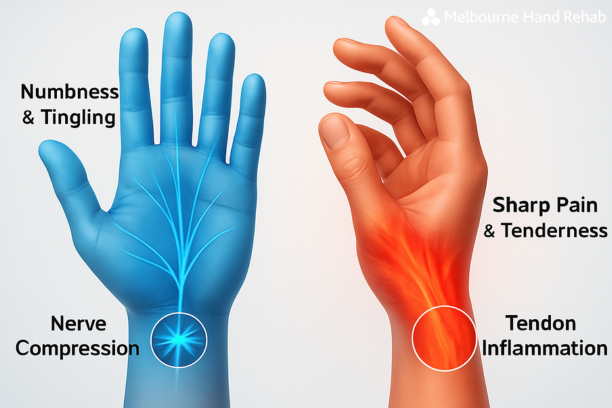
Understanding whether your pain is coming from a tendon or a nerve is key to getting the right treatment. While both can affect the upper limb, they present very differently.
This guide will help you recognise the difference, understand common injuries, and know
when to seek professional care.
The difference between a tendon and a nerve
Tendons are strong, fibrous tissues that connect muscles to bones. They play a critical role in movement by transmitting the force generated by muscles to create joint motion.
Nerves are responsible for transmitting signals between your brain, spinal cord, and the rest of your body. They control both movement (motor function) and sensation (feeling).
How Do Tendon Injuries Present?
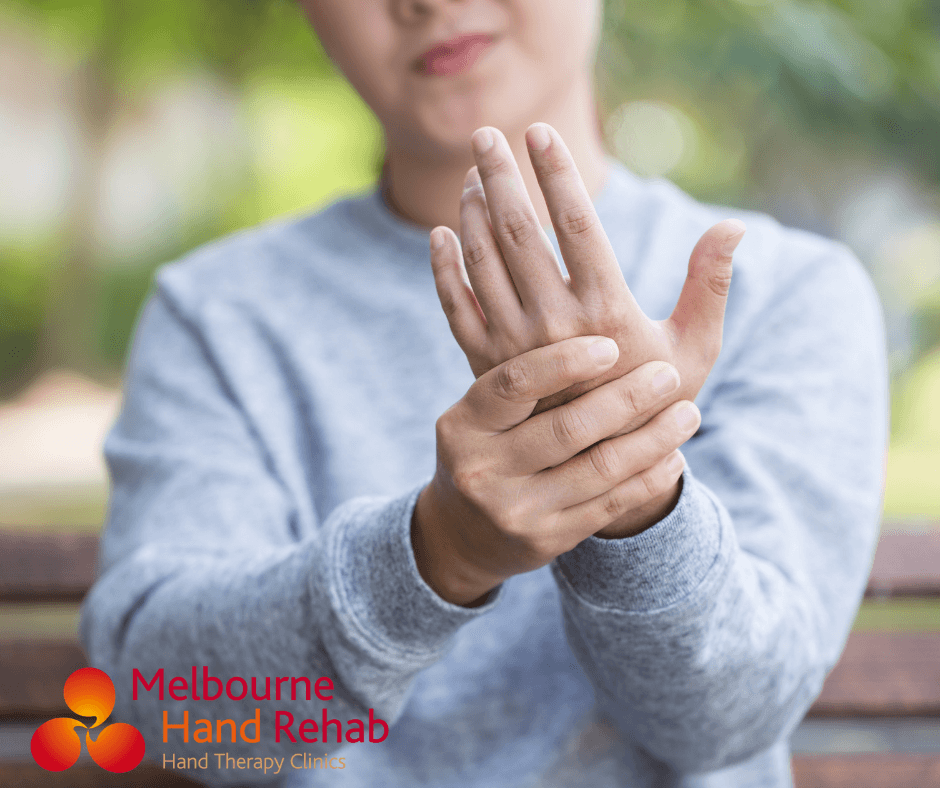
Tendon injuries are usually caused by overload, repetitive strain, or sudden trauma. Pain is typically localised, meaning you can point directly to where it hurts.
Common Tendon Injuries
Rupture (Complete Tear)
- Sudden, severe injury
- Often accompanied by a “popping” sound
- Immediate loss of movement
- Swelling and bruising
- Requires urgent medical attention (often surgical)
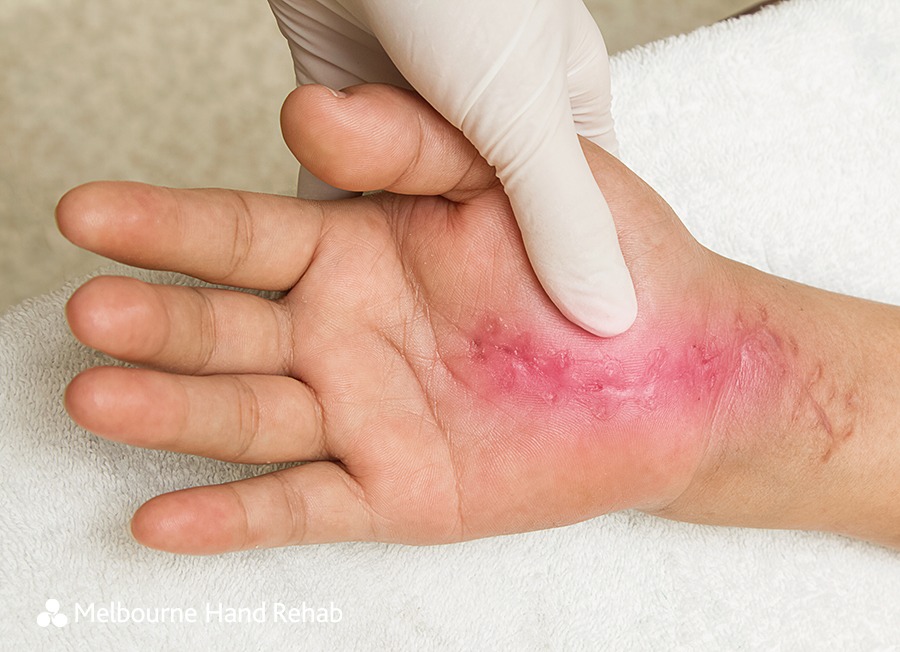
Partial Tear
- Less severe than a rupture
- Sharp pain followed by stiffness
- Reduced strength and movement
- Swelling and tenderness
Avulsion Injury
- Tendon pulls away from the bone
- Often caused by trauma
- Significant weakness or inability to move the joint
- Pain, swelling, and bruising

Tendinopathy (Overuse Injury)
- Gradual onset from repetitive activity
- Dull, aching pain
- Stiffness, especially after rest
- Pain with movement or loading
Managing Tendon Pain
- Short-term rest or immobilisation
- Gradual return to movement
- Strengthening and tendon-loading exercises
- Activity modification
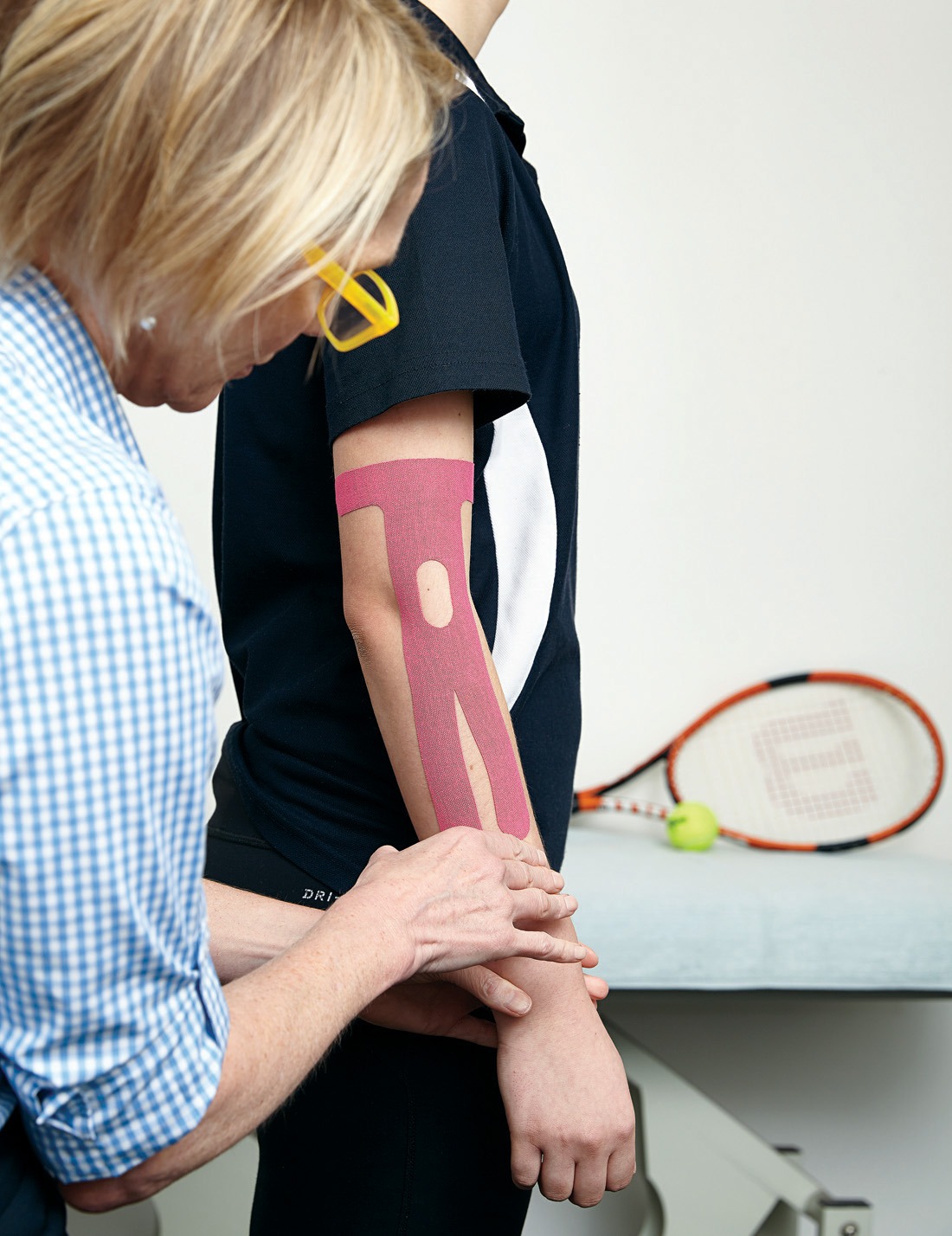
- Taping or bracing if needed
When to See a Therapist for Tendon Pain
- Pain persists despite rest
- Swelling or stiffness limits movement
- Weakness affects daily tasks
- Sudden loss of function or severe injury
How Do Nerve Injuries Present?
Nerve-related pain feels very different from tendon pain. It is often described as:
- Tingling (“pins and needles”)
- Burning or shooting pain
- Numbness
- Weakness in specific muscle groups
Symptoms may travel along a path rather than stay in one spot.
Common Nerve Conditions
Carpal Tunnel Syndrome (Median Nerve)
- Tingling in thumb, index, and middle and ring fingers
- Numbness, especially at night
- Weak grip strength
Read more about Carpal Tunnel Syndrome HERE
Helpful strategies:
- Wrist splinting
- Median Nerve gliding exercises
- Stretching forearm muscles
- Strengthening grip
Radial Nerve Palsy
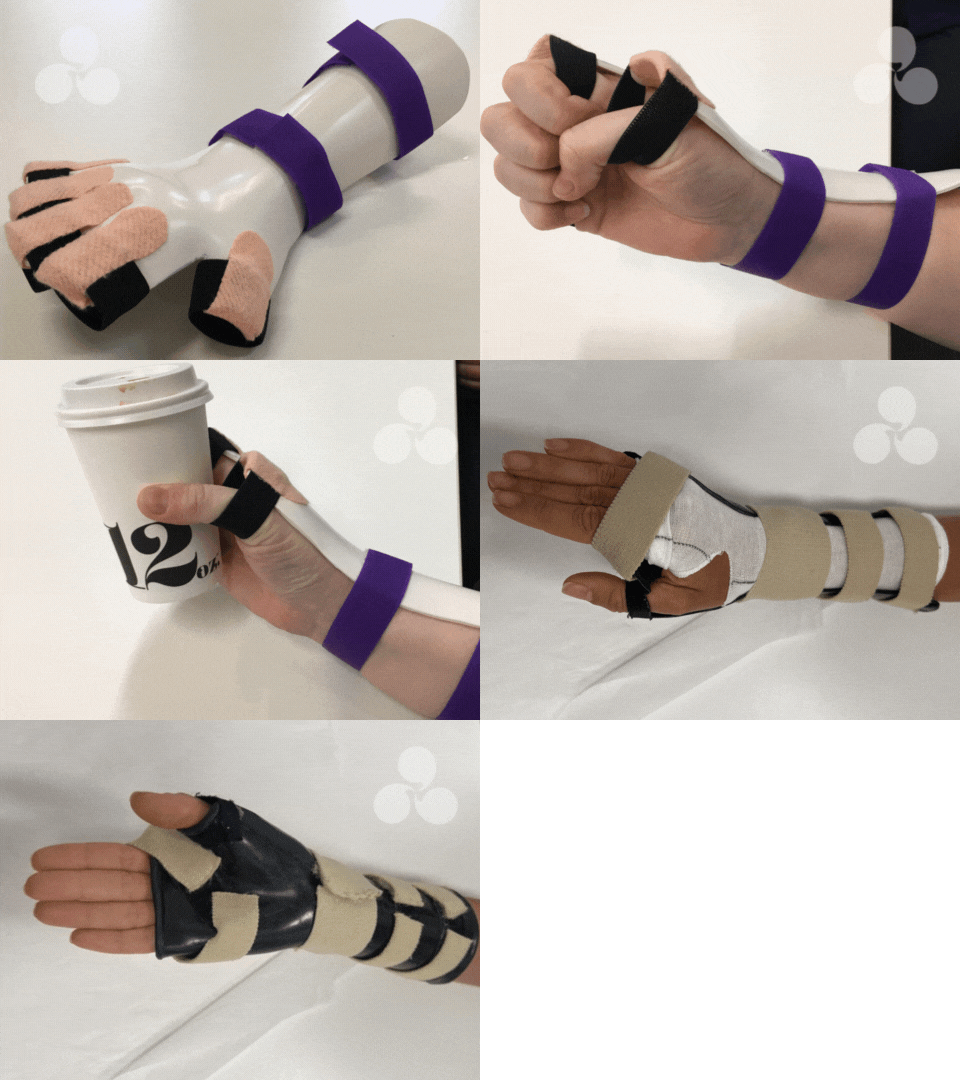
- Difficulty lifting the wrist (“wrist drop”)
- Weakness in finger extension
- Burning or tingling on the back of the hand
Watch our video: Radial Nerve Palsy Rehabilitation
Helpful strategies:
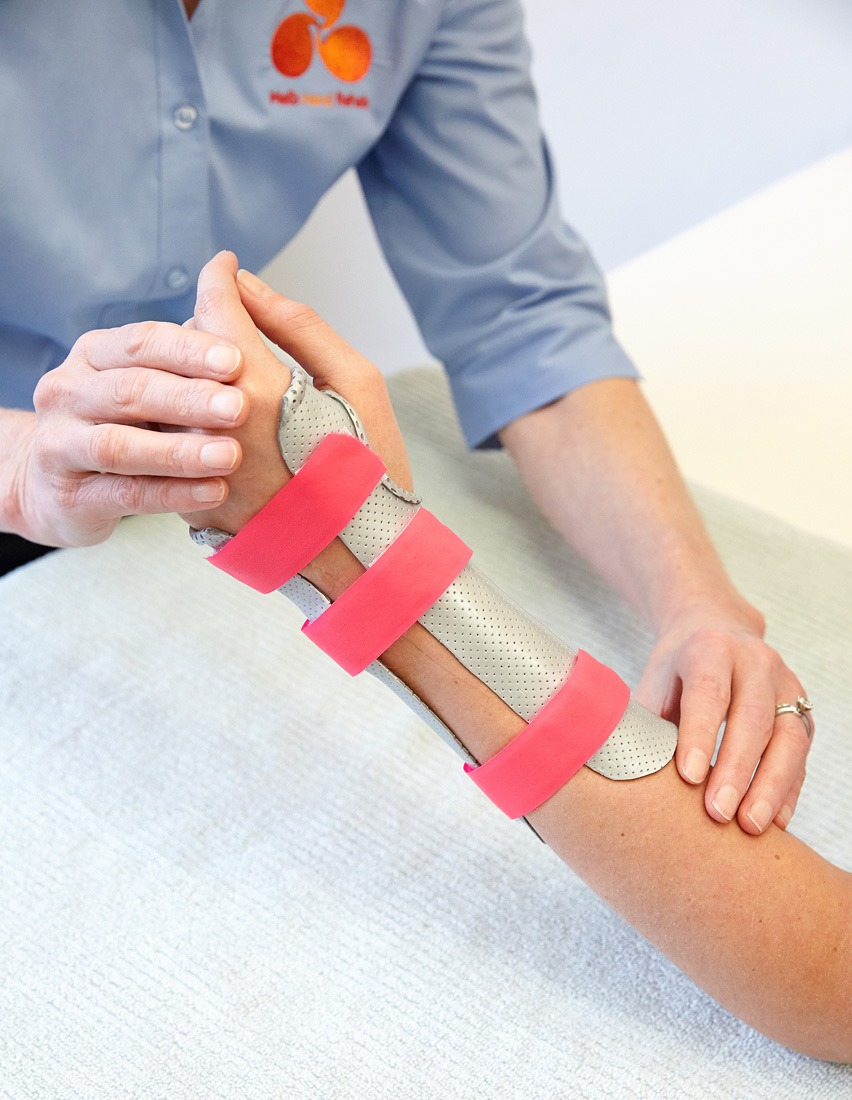
- Splinting to support wrist position
- Gentle movement exercises
- Activity modification
- Soft tissue work
Cubital Tunnel Syndrome
- Tingling in ring and little fingers
- Numbness in hand and elbow
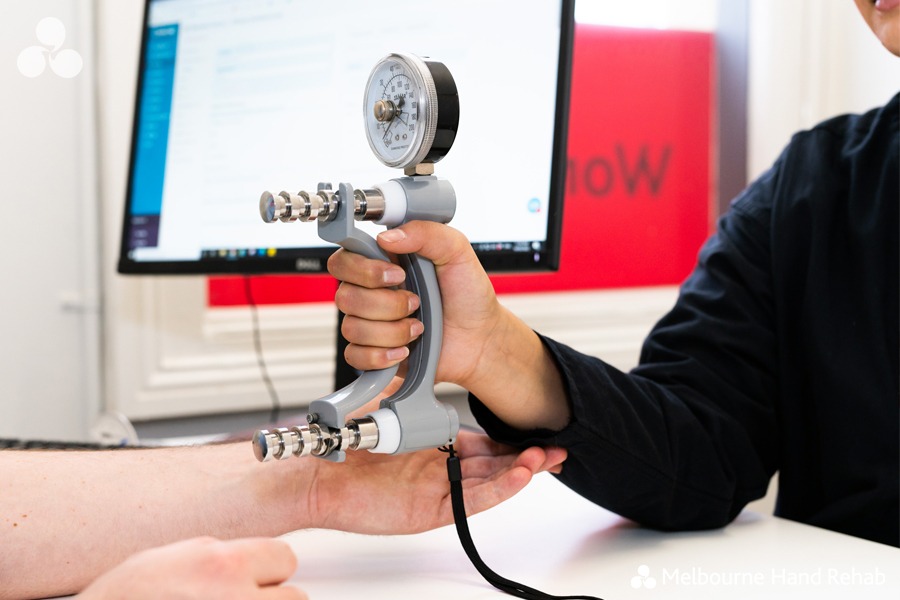
- Reduced grip and pinch strength
Concerned about your grip strength? Read more HERE
Helpful strategies:
- Avoid prolonged elbow bending
- Night splinting
- Ulnar nerve gliding exercises
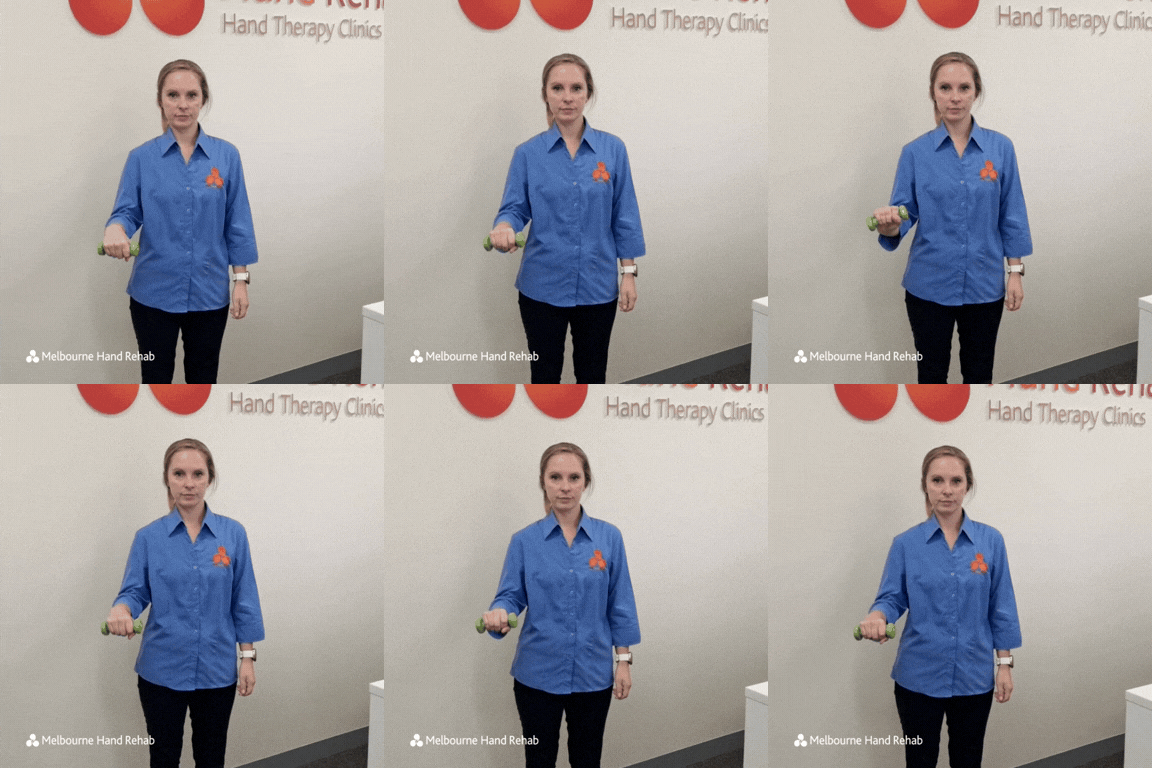
- Strengthening and conditioning
When to Seek Help for Nerve Pain
- Symptoms occur daily or worsen over time
- Persistent numbness or tingling
- Noticeable weakness or loss of coordination
- Symptoms interfere with sleep or daily activities
In Summary
Tendon and nerve injuries can feel similar at first, but recognising the differences is essential for effective treatment. Early intervention can prevent long-term issues and help you return to normal function faster.
Key differences: Tendon Vs Nerve Pain
Tendon Pain = Localised to one area, aching or sharp with movement, worse with loading & strength limited by pain
Nerve pain = Travels along a path, tingling, burning, or numb, may occur at rest or night & true muscle weakness

If you are experiencing upper limb discomfort and would like a helping hand, book an appointment online or call 03 9458 5166!
BOOK AN APPOINTMENT
For more information, call us directly on 03 9458 5166
You might also be interested in: